
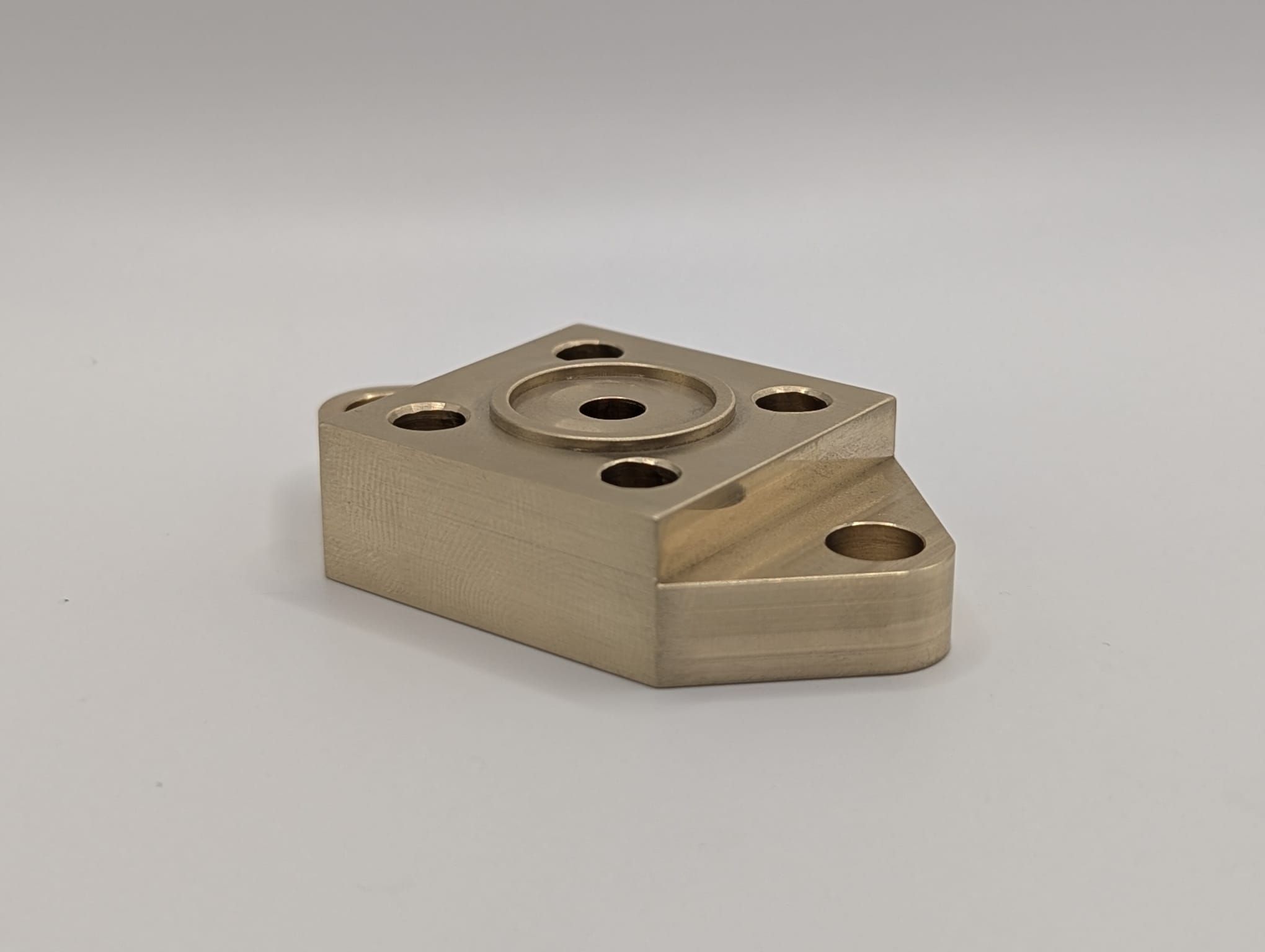
A precision machined part is only as good as the thinking that went into it before the spindle starts turning. At Tru-Tech Precision, we have learned that the best outcomes happen when our engineering team and our customer's design team work together — not in sequence, but side by side. We are not a shop that simply receives a drawing, quotes it, and machines it without question. We actively engage with your engineers to make sure every part we produce is manufacturable, cost effective, and built to perform exactly as intended.
This collaborative approach is not an add-on service. It is how we operate on every project, from first article prototypes to full production runs. And it is one of the reasons our customers keep coming back.
Why Collaboration Matters in Precision Manufacturing
Design engineers are experts in what a part needs to do. Manufacturing engineers are experts in how to make it. Problems arise when these two perspectives do not talk to each other early enough.
A design might call for a tolerance that is technically achievable but adds significant cost because it requires secondary operations or specialized fixturing. A wall thickness might look fine in CAD but creates chatter or deflection during machining that compromises surface finish. A material callout might meet the performance requirement but have a 16-week lead time when an equally suitable alternative is available in days.
These are not design mistakes — they are gaps between design intent and manufacturing reality. Closing those gaps early saves time, reduces cost, and produces better parts. That is where our team comes in.
How We Work with Your Engineering Team
Early Design Review
We encourage customers to involve us as early as possible — ideally while the design is still in development, not after the drawing is released. Our engineers review your CAD models and drawings with a manufacturing lens, looking for opportunities to improve the design without compromising performance. This complimentary Design for Manufacturability (DFM) review is available on every new project.
During a DFM review, we examine:
- Tolerance optimization: Are the specified tolerances necessary for function, or can some be relaxed without affecting performance? Tighter tolerances mean slower machining speeds, more inspection time, and higher cost. We identify which dimensions are truly critical and which ones offer room for optimization.
- Feature accessibility: Can every feature on the part be reached with standard tooling and reasonable setups? Deep pockets, thin walls, small internal radii, and features that require the part to be flipped multiple times all add complexity. We suggest alternatives that achieve the same function with simpler manufacturing.
- Material selection: Is the specified material the best choice for both performance and machinability? Sometimes a different alloy or temper condition machines more efficiently, costs less, and delivers equivalent mechanical properties. We bring that shop-floor perspective to the conversation.
- Surface finish achievability: The surface finish called out on the drawing needs to be achievable with the machining process and tooling used. We flag callouts that may require additional operations like grinding or lapping and discuss whether the application truly requires that level of finish.
Influencing Design for Better Outcomes
We do not just flag problems — we propose solutions. When we see an opportunity to improve a design, we present specific recommendations with clear reasoning. Our engineers explain what we would change, why the change benefits the customer, and what the impact is on cost and lead time. The final decision always stays with the customer's engineering team, but we make sure they have the manufacturing perspective they need to make an informed choice.
Here are examples of design influence that have saved our customers real time and money:
- Consolidating setups: A bracket originally designed with features on six sides required four separate setups to machine. By suggesting minor geometry changes — shifting a hole pattern by a few millimetres and adjusting a pocket orientation — the part could be completed in two setups. The customer saved roughly 40% on per-part machining cost with zero impact on fit or function.
- Relaxing non-critical tolerances: A housing had a general profile tolerance of 0.001" applied across the entire part. After reviewing the assembly with the customer's engineers, we identified that only two mating surfaces actually needed that tolerance. Relaxing the rest to 0.005" cut inspection time in half and reduced scrap rate.
- Material substitution: A customer specified a titanium alloy for a structural bracket based on weight requirements. Our team suggested a high-strength aluminum alloy that met the same strength-to-weight ratio for this particular application. The aluminum machined four times faster, cost significantly less in raw material, and had immediate availability versus an eight-week lead time for the titanium.
- Adding draft angles and radii: A component designed with sharp internal corners required EDM operations to achieve. By working with the customer's team to add small radii that their assembly could accommodate, the part became fully machinable on our 5-axis mills — eliminating EDM cost and cutting lead time by over a week.
Open Communication Throughout Production
Collaboration does not end once the drawing is approved. During production, our team maintains direct communication with your engineers. If we encounter an unexpected challenge — a material inconsistency, a feature that behaves differently than expected during machining, or an opportunity to improve the process — we pick up the phone. We do not make assumptions, and we do not wait until shipment to surface issues.
This is especially important for first article runs, where the part is being manufactured for the first time. First articles often reveal things that neither the design team nor the manufacturing team fully anticipated. Our approach is to treat the first article as a joint learning exercise — documenting what worked, what needed adjustment, and feeding that knowledge back into the process for production runs.
Handling Deviations Collaboratively
Even with the best planning, manufacturing sometimes produces results that do not perfectly match the drawing. When this happens, our approach is transparent and solution-oriented.
We document the deviation with precise measurements and supporting data, then present it to your engineering team with our assessment of the impact on fit, form, and function. We provide options — rework, use-as-is with engineering approval, or scrap and remake — along with our recommendation and the rationale behind it. The customer's engineering team makes the final call, but they make it with all the information they need.
This process is formal and traceable under our AS9100 quality system. Every deviation is documented, dispositioned, and recorded. But the spirit behind it is collaborative — we are working with your team to find the best outcome, not just pushing paperwork.
Why This Approach Works
Aerospace and defence manufacturing does not reward a transactional relationship between customer and supplier. Parts are too complex, tolerances too tight, and stakes too high for a shop to simply take an order and hope for the best. The suppliers who deliver consistent quality and value are the ones who invest in understanding their customer's application and contribute their manufacturing expertise to the process.
At Tru-Tech, our collaborative engineering approach delivers tangible results:
- Lower part cost: DFM recommendations and design optimizations routinely reduce per-part cost by identifying unnecessary complexity before production begins.
- Shorter lead times: Resolving manufacturability questions up front prevents delays during production. Parts move through the shop faster when the process plan is solid from the start.
- Higher first-pass yield: When designs are optimized for manufacturing, fewer parts are scrapped or require rework. This means better on-time delivery and less waste.
- Fewer surprises: Open communication and early involvement mean that issues are caught and resolved before they become expensive problems. No one likes surprises in aerospace manufacturing.
- Stronger long-term partnerships: Customers who experience this level of engagement do not shop on price alone. They value a supplier who actively contributes to their success — and that builds relationships that last.
We Work as an Extension of Your Team
When you work with Tru-Tech, you are not just getting a machine shop — you are getting a manufacturing engineering partner that is invested in your outcome. Our engineers bring decades of combined experience machining complex parts for aerospace, nuclear, space, and marine applications. That experience is available to your team from the moment you share a drawing with us.
Whether you are developing a new component and want manufacturing input early, looking to reduce cost on an existing production part, or need a supplier who will work through a challenging design with your engineers rather than simply rejecting the quote — we are built for that kind of work.
If you want a manufacturing partner who thinks with you, not just builds for you, let's talk.